A Proof Is Not a Fact. It Is a Path.
What makes a proof is neither sincerity nor precision, but continuity: a chain of transformations in which every link remains reversible.
A chef in institutional catering holds a supplier data sheet in his hands. It claims: French origin, short supply chain, harvested this week. He must transfer these figures into his sourcing report — the law requires it of him, and he does so willingly, because he believes in what it measures.
But what is the difference between this sheet and a proof? It is not the supplier’s sincerity: the chef knows him, trusts him. It is not the precision of the document: everything is there, boxes checked, stamp, signature. It is something else — and that something else is probably the most misunderstood notion in the entire food chain.
To grasp it, we need a detour. Far from school canteens: to the Amazon.
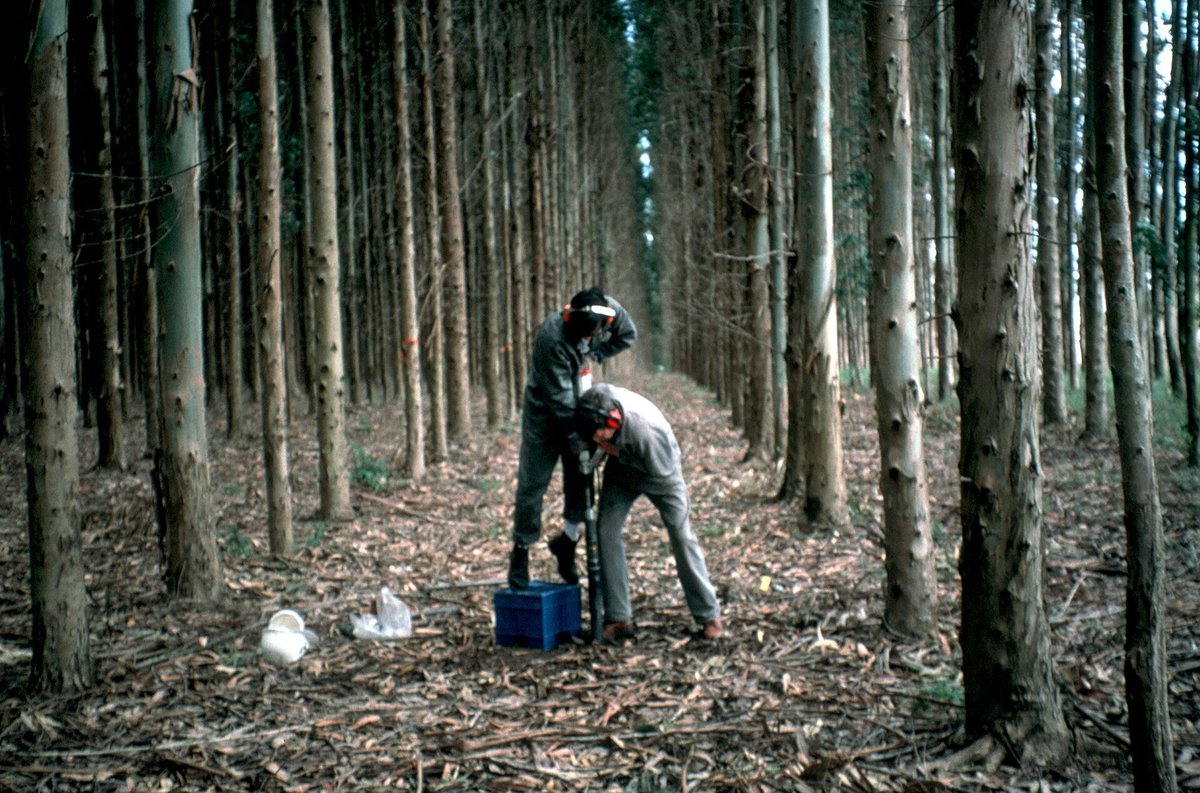
In the 1990s, a small team of scientists — a botanist, two soil scientists, a geographer — set up at the edge of the forest, near Boa Vista, Brazil. Their question fits in one line: is the forest advancing on the savanna, or retreating? The final answer would fit in eight pages, in a scientific journal, with a diagram.
What happens between the forest and the diagram is fascinating to watch closely. The soil becomes a sample: a core of earth, taken at a precise spot, marked with a numbered stake. The sample becomes a compartment: stored in a pedologist’s case, a wooden frame divided into cells, where each cube of earth occupies a coded position. The compartment becomes a number: colour, texture, composition, noted in a notebook. The number becomes a table, the table becomes a diagram, the diagram becomes an article.
At every stage, something is lost. The earth loses its moisture, its smell, its worms, its context. But at every stage, something else is gained: portability. The forest does not travel; the diagram does. It fits in an envelope, crosses the Atlantic, gets compared to other diagrams from other forests.
And above all — this is the point almost everyone misses — at every stage, one can go back. The diagram refers back to the table. The table refers back to the notebook. The notebook refers back to the case. The case refers back to the hole in the ground, still marked by its stake. Any skeptical colleague can retrace the path in reverse, link by link, all the way to the earth itself.
That is what a proof is.
It is not some magical correspondence between a word and a thing. No one has ever seen a sentence “correspond” to a forest. A proof is a chain of transformations in which every link is reversible. The solidity of the final statement does not come from mysterious contact with reality: it comes from the continuity of the path.
And this changes everything, because it tells us what happens when a link breaks. Lose the case. Burn the field notebook. The diagram does not become false — it becomes unverifiable. Which is worse. A false statement can be corrected: the measurement is redone, an erratum is published. An unverifiable statement can do nothing more. It floats. One may believe it or not — meaning it has ceased to be a proof and become, once again, an opinion.
Back to the chef’s data sheet.
It may well be telling the truth. That is not the question — and this is precisely why the public debate on food goes in circles: it keeps asking the question of sincerity (“who is lying?”) when the problem lies elsewhere. The real question is: between the field and the sheet, how many links are there? And how many still hold?
Follow the batch. It leaves the farm with a delivery note. At the wholesaler’s, it is mixed with two other batches of the same grade — that is the wholesaler’s very trade: consolidate, break down, redistribute, and no one would feed the cities without it. The pallet is split, part of it leaves again that same evening. The delivery note is re-entered by hand into another system, which knows nothing of the first. Three documents now describe the same goods, with no shared reference.
At no point did anyone lie. Everyone did their job, correctly, with the tools they were given. And yet, at the end of the chain, no one can retrace the path in reverse anymore. The stake in the ground has disappeared.
That is opacity. Not fraud: a chain whose links have broken. The distinction is not a detail, it overturns the way the problem is framed. Because if opacity were fraud, more inspection would be enough. But one does not inspect a discontinuity: one repairs it.
It also overturns a deeply rooted reflex: the confusion of proximity with proof. A product from Spain whose chain has remained continuous — every transformation recorded, every link reversible — is more provable than a product from the neighbouring village whose chain broke at the second intermediary. Origin is not the proof. The path is the proof.
What would it take, then?
Not more sincerity: there is no shortage of it. Not more labels: a label is one more statement, and a statement is only worth the chain behind it. Not more declarations: declaring after the fact means reconstructing the path from memory, and memory is the most fragile of all links.
What is needed is an infrastructure that prevents links from breaking. Every transformation — harvest, loading, batching, delivery — should be recorded the moment it occurs, by whoever performs it, in a form the next link cannot overwrite. The stake must stay planted. Some witnesses do not even need to be asked: a temperature probe that travelled with the shipment is a witness that never misremembers.
None of this requires taking anyone’s word for it. It is, in fact, exactly the opposite: a continuous chain is what allows us to dispense with trust where it costs too much, so as to reserve it for the places where it is worth something.
The chef himself does not need this detour through the Amazon to sense the problem. But the detour gives him the right question. Facing the next data sheet, it is not: “is this true?” It is: “can I retrace the path?”
As long as the answer is no, we are not short of truth. We are short of paths.
—
The story of Boa Vista is borrowed from Bruno Latour (Pandora’s Hope, 1999) — the anthropologist of science who spent his life showing that scientific truth does not fall from the sky: it is manufactured, link by link, through instruments, notebooks, and institutions, and it dies the moment the chain stops being maintained.
Ce que ça change pour vous
Le même raisonnement ne se joue pas au même endroit selon votre place dans la chaîne.
Vous êtes collectivité ou acheteur public
The chef’s data sheet isn’t false: it’s terminal. What an EGalim inspection asks for is the ability to trace the chain back — not one more declaration to read.
VeraTrace pour les territoires →Vous êtes producteur
What holds your declaration up isn’t your sincerity: it’s that every step between the plot and the plate remains reversible.
VeraTrace pour les producteurs →Vous transformez, vous êtes une marque
Every transformation loses information. The question isn’t keeping everything, it’s keeping what lets you trace your way back.
VeraTrace pour les transformateurs →