
Justice
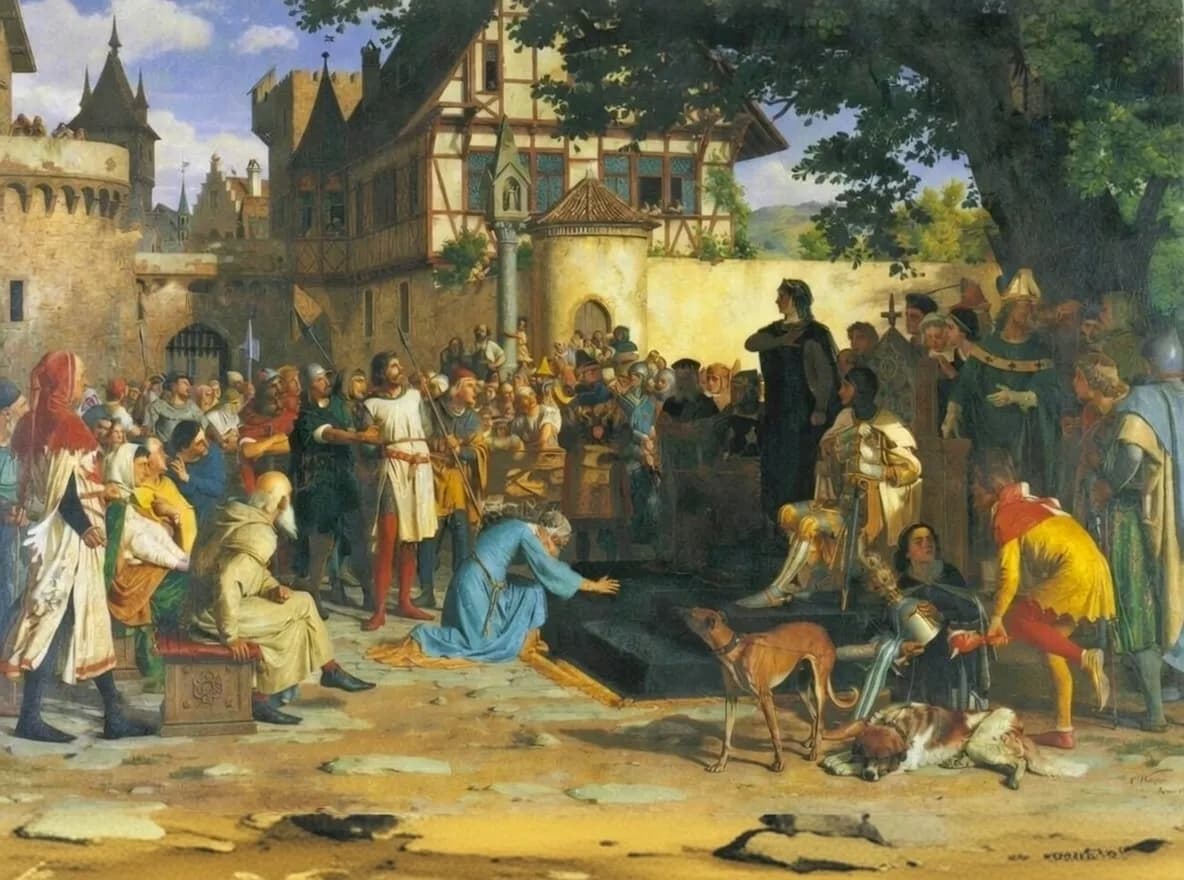
In medieval France, the elm tree stood at the center of village life.
Under its canopy, seigneurs held court. Peasants brought their disputes — land boundaries, unpaid debts, accusations of theft. The verdicts were delivered publicly, in the open air, witnessed by anyone who cared to watch. They called it "l'arbre de justice." The tree of justice.
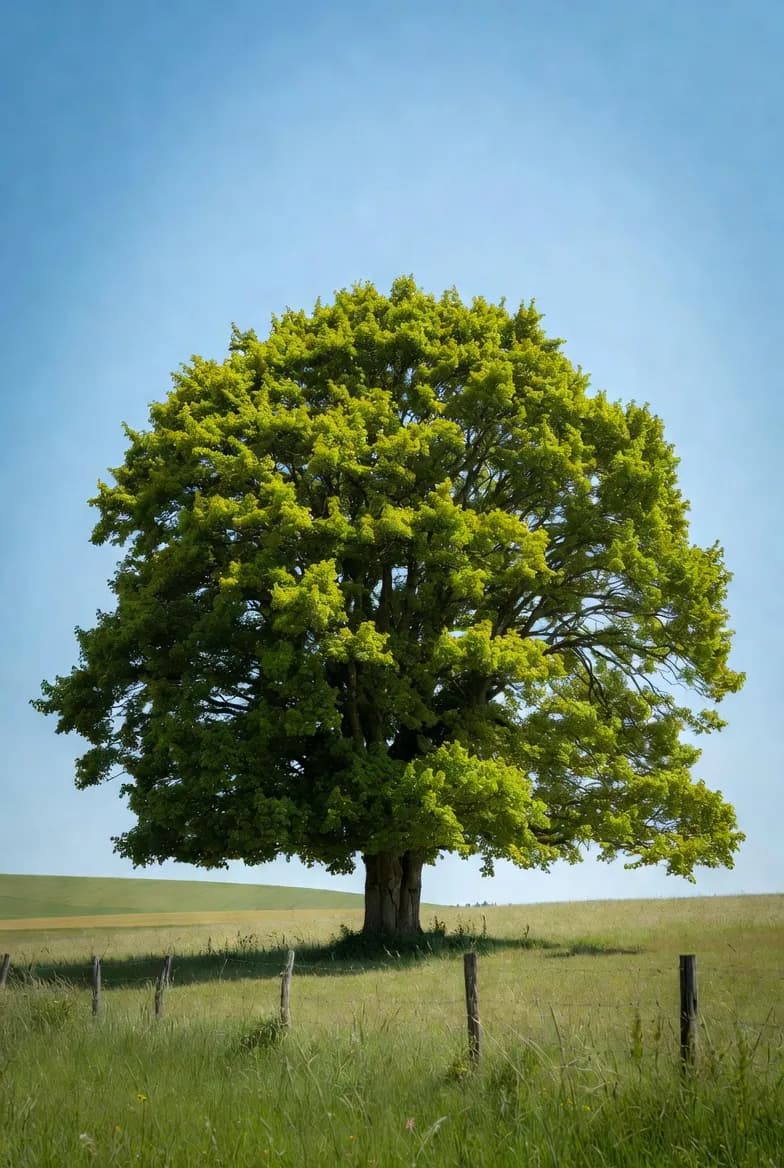
The practice wasn't random. The elm's canopy grows in a distinctive dome shape, broad and dense, capable of shading a hundred people in midsummer. The trunk thickens with age — mature specimens reach two meters in diameter. And elms live for centuries. A tree planted by one lord would still be standing when his great-great-grandchildren ruled.
The elm embodied continuity. The law endured; men came and went.
England had similar traditions. Courts convened on village greens, often beneath elms. Market transactions were witnessed under their branches. The phrase "to meet under the elm" meant a formal appointment, a matter of record.
This wasn't sentimentality. It was practical. Before written contracts were widespread, public witness mattered. What happened under the elm, in plain sight, was remembered. What happened behind closed doors could be denied.
Origins
The elm's significance predates medieval courts.
In Norse mythology, the first humans were created from two trees found on a beach. The gods Odin, Vili, and Vé were walking along the shore when they discovered two logs washed up by the sea. They took the wood and shaped it into human form. One god gave them breath, another gave them movement and intelligence, the third gave them shape, speech, hearing, and sight.
The man, Ask, came from an ash tree. The woman, Embla, came from an elm.
Embla — mother of humanity in the Germanic tradition — was born from elm wood.
This wasn't only a Scandinavian story. The myth belongs to a shared Germanic heritage that stretched from Iceland to the Alps. In Schleswig, northern Germany, archaeologists discovered the Braak Bog Figures — two wooden statues, one male, one female, "more than human height," preserved in a peat bog. Some scholars believe they represent the same divine pair that would later be called Ask and Embla.
The etymology of Embla remains debated. Most scholars link it to "almr," the Old Norse word for elm. Others suggest "vine" — which would connect the myth to the Mediterranean tradition of elm and vine as partners. Either interpretation places the elm at the origin of human life.
The tree left its mark on the landscape itself. The German city of Ulm, on the Danube, takes its name from the elm — "Hulma" in its earliest recorded mention in 854 AD, derived from the Old High German word for the tree. Before the world wars and Dutch elm disease, Germany was the center of European elm cultivation.
A tree of origins. A tree of justice. A tree whose roots connect underground. The symbolism accumulated over centuries, across cultures.
The Marriage
In Roman Italy, elms and vines were wed.
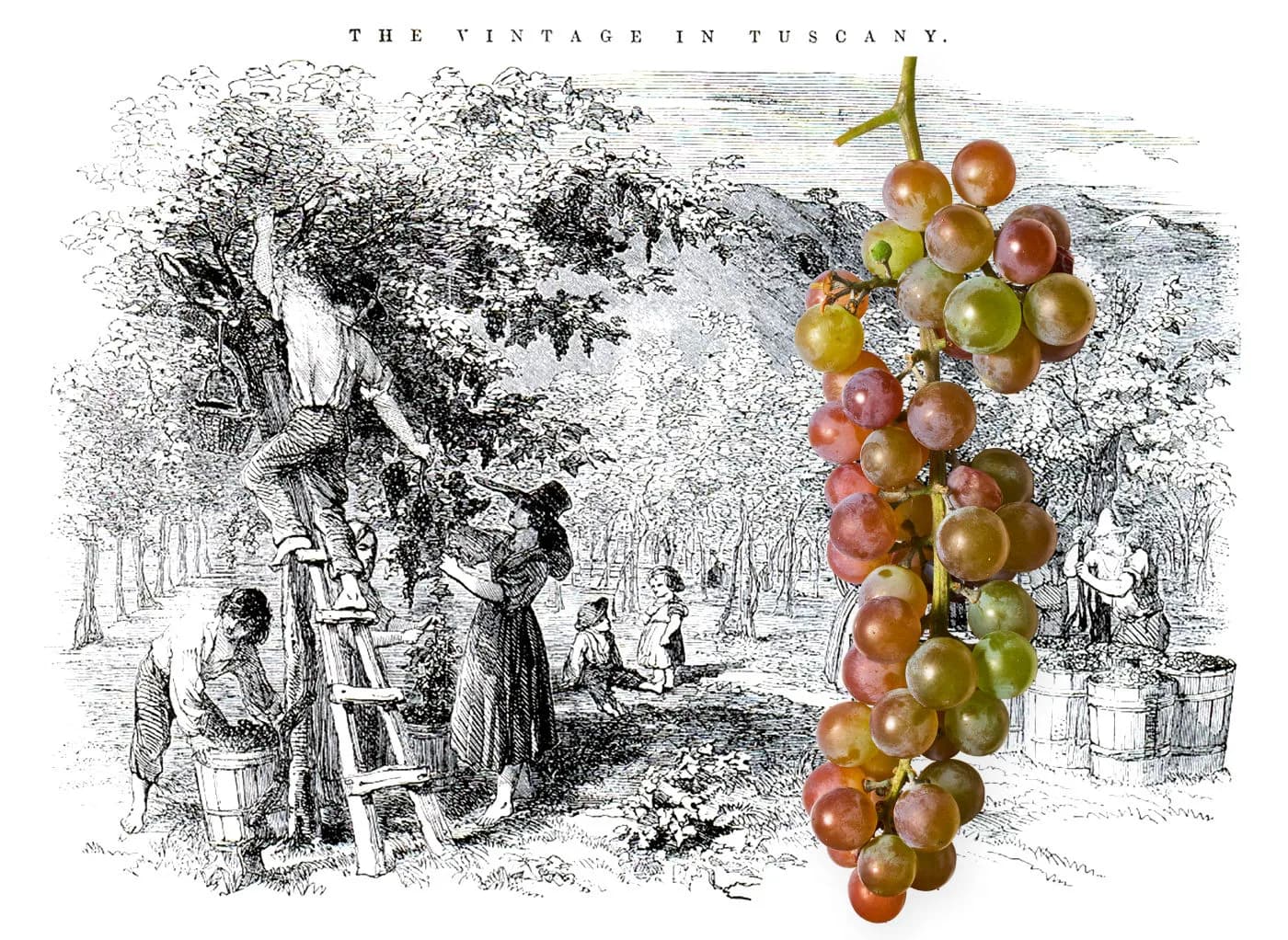
Not metaphorically. Literally. Roman farmers trained their grapevines up elm trees instead of using wooden stakes. The elm provided structure — its trunk and branches supporting the vine as it climbed toward the light. The vine provided purpose — transforming the elm from a barren tree into a productive one. The practice was called "arbustum," and it shaped Italian landscapes for two thousand years.
The poets noticed.
Ovid told the story of Vertumnus and Pomona in his Metamorphoses. Vertumnus, god of seasons, tries to seduce Pomona, goddess of orchards. Disguised as an old woman, he points to a vine climbing an elm in her garden. "See how the vine and elm support each other," he says. "Apart, both would be diminished. Together, they thrive." The argument for marriage, made through trees.
Catullus used the same image. So did Virgil. The elm and vine became a standard metaphor for partnership — two unlike things that accomplish more together than either could alone. The strong supporting the fruitful. The fruitful giving meaning to the strong.
The image spread beyond poetry into Renaissance emblem books. Andrea Alciato's Emblemata, published in 1531 and reprinted hundreds of times across Europe, featured the elm and vine under the title "Amicitia etiam post mortem durans" — friendship lasting even after death.
When the poet Antonio Machado wrote "A un olmo seco" in 1912, he chose the elm deliberately. The poem describes an ancient elm, split by lightning, half-rotten, infested with ants and spiders. Yet with the April rains and May sun, a few green leaves have appeared. The poet watches and waits — "Mi corazón espera" — my heart hopes.
The elm, already a symbol of community and partnership, became also a symbol of resilience — of life returning where death seemed certain.
Roots
An elm's root system mirrors its canopy.
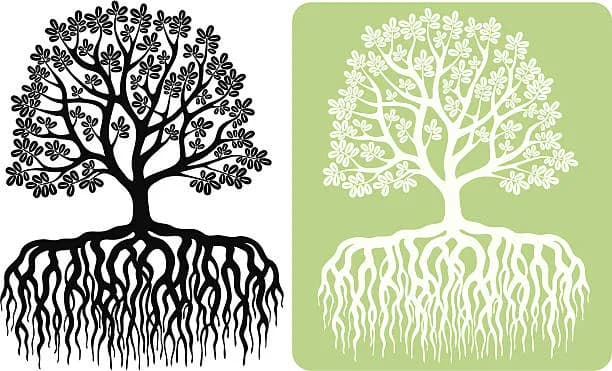
The primary roots descend vertically — three meters, sometimes five — until they reach groundwater. Then they spread horizontally, radiating outward, often extending beyond the canopy's edge. A mature elm explores several hundred square meters of soil.
But the roots do more than anchor the tree and absorb water. Elms possess a rare ability: suckering.
Their roots can produce new shoots far from the main trunk. An elm cut down, burned, decimated by disease, can resurface ten or twenty meters away, where no one expected it. What seems dead underground is preparing its return. A single tree can give rise to an entire colony, connected by the same root system.
Forest ecologists speak of the "Wood Wide Web" — the underground network through which trees in a forest exchange nutrients and warning signals via their roots and symbiotic fungi. The elm, with its suckers, takes this logic further: it doesn't just communicate, it replicates.
That solitary tree in the village square — trunk, branches, leaves — may be only the visible node of an invisible network. The roots weave connections beneath the surface, create resilience, prepare the future.
A single tree is vulnerable. A root network that suckers persists.
Boundaries
Elms weren't planted only in village squares.
In the English countryside, they lined the hedgerows that divided fields. In France, they stood on the banked borders — the "talus" — separating properties. In the Netherlands, they bordered canals and drainage ditches. Across Europe, the elm marked edges.
This wasn't decorative. It was functional.
Elm roots stabilize soil. On a raised bank between two fields, an elm's root system holds the earth in place, preventing erosion. Along a canal, elm roots keep the banks from crumbling into the water.
Elm wood has a peculiar property: it resists rot when permanently submerged. This made it valuable for specific uses — water pipes before iron became cheap, the keels of boats, the hubs of cart wheels that spent their lives in muddy ruts.
Elm leaves are rich in protein. When harvests failed and hay ran short, farmers cut elm branches and fed the leaves to livestock. It wasn't ideal nutrition, but it kept animals alive through hard winters.
The elm served. It marked boundaries, stabilized land, provided materials, fed animals in emergencies. Each elm removed was a small subtraction from the village's infrastructure.
Collapse
The disease arrived in Europe around 1910, first identified in the Netherlands — hence "Dutch elm disease," a name that unfairly blamed the victims.
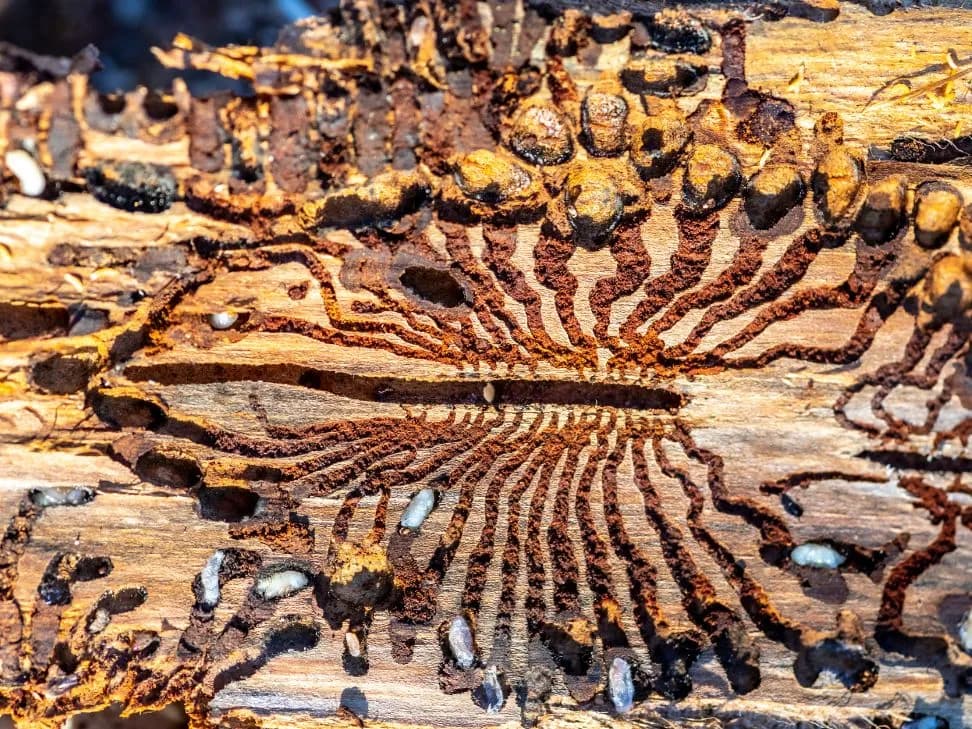
The pathogen is a fungus, Ophiostoma ulmi. The vector is a beetle, the elm bark beetle, a few millimeters long. The beetle burrows under elm bark to lay its eggs. The fungus hitches a ride, colonizes the tunnels, then spreads into the tree's vascular system. It blocks the vessels that carry water from roots to leaves. The tree dies, often within a single growing season.
The first epidemic, from the 1910s through the 1940s, killed elms across Europe. It was severe but survivable. Many trees had partial resistance. Populations declined but persisted.
Then came the second wave.
In the late 1960s, a new strain appeared — Ophiostoma novo-ulmi — likely imported to Britain on Canadian timber. This strain was far more virulent. Trees that had survived the first epidemic succumbed to the second. The mortality rate approached 100% in susceptible populations.
In Britain, the numbers were staggering. Before the disease, the country had an estimated thirty million elms. By the mid-1980s, twenty-five million were dead. The English elm, Ulmus procera — a species largely confined to Britain — was functionally eliminated from the landscape.
The visual impact was profound. People who grew up in the 1950s and 1960s remembered landscapes dominated by elms. Their children grew up in a world where those trees simply didn't exist. The elm-lined avenue, once a standard feature of European countryside, became a historical memory.
America
The story repeated across the Atlantic.
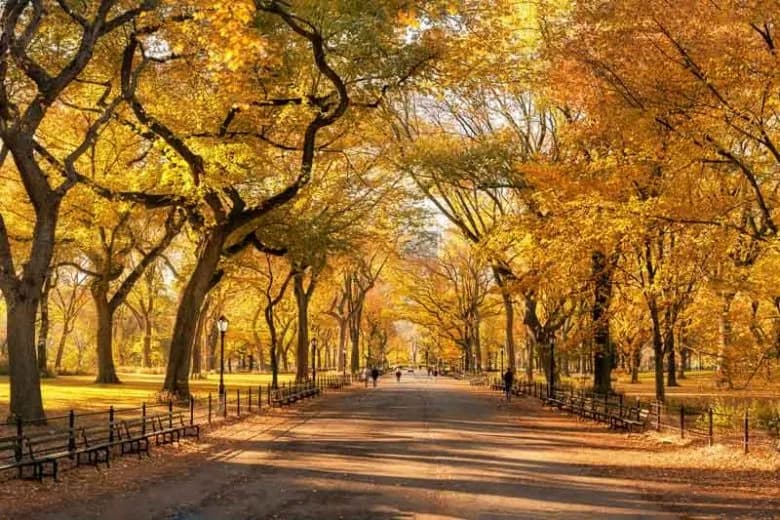
The American elm, Ulmus americana, was the definitive street tree of the northeastern United States. From Boston to Chicago, towns planted elms along their main streets. The trees formed cathedral-like canopies over the roads, branches arching from both sides to meet in the middle. Elm-lined Main Street became an American icon — the visual shorthand for small-town stability and prosperity.
Dutch elm disease reached North America in the 1930s, probably on infected timber shipped from Europe. It spread slowly at first, then accelerated. By the 1970s, most American elms in urban settings were dead or dying.
Some cities fought back. Minneapolis injected fungicides into its elms for years, trying to preserve them. A few towns — notably, small communities in the Great Plains, isolated enough that the beetle arrived late — still have intact elm canopies. But these are exceptions. The elm-lined American Main Street is largely gone.
The psychological effect mattered as much as the ecological one. A generation of Americans watched the trees of their childhood die. The elm became associated with loss, with a vanished past.
Return
The elm is not extinct.
Scattered survivors persisted through both epidemics — trees with natural resistance, trees in isolated locations where the beetle never arrived, trees that got lucky. These survivors became the basis for recovery.
Research programs began in the 1960s, accelerating after the second epidemic. At INRAE in France. At the Forest Research agency in Britain. At universities in the Netherlands, Spain, the United States. The goal: identify resistance genes, cross resistant individuals, breed elms that could coexist with the fungus.
The work is slow. Trees aren't bacteria. You can't test a thousand generations in a year. Growing an elm to maturity takes decades. Testing its resistance requires exposing it to the disease and waiting. Validating a new variety is a multi-decade project.
But results have emerged.
Resistant cultivars now exist. In Europe: Lutece, developed in France; Columella and Vada from the Netherlands; various Spanish hybrids. In America: Princeton, Valley Forge, New Harmony — selections from surviving American elms with demonstrated resistance.
These trees are being planted. Slowly, in small numbers, but steadily. Pilot programs are reintroducing elms to parks, streets, and hedgerows. The trees are young still, most under thirty years old. It will take another generation before anyone can claim success.
But the elm is returning.

What It Means
We chose the elm for a reason.
A tree associated with justice, with transparency — disputes settled in plain sight, not behind closed doors. A tree whose roots form networks, sharing resources and information underground. A tree that once defined European and American landscapes, was nearly destroyed, and is now being painstakingly rebuilt.
The food system has its own disease. Opacity. The connections between producer and consumer have been severed by layers of intermediaries. The origins of food — where it was grown, how it was raised, who handled it — are hidden. Scandals erupt regularly because no one can trace what went wrong or where.
Trust has collapsed, like the elms collapsed.
Rebuilding it requires the same slow, patient work. No miracle cure. No single intervention. Just steady effort, tree by tree, farm by farm, proof by proof.
The elm returns.
For centuries, justice was rendered under the elm. For decades, the elm nearly vanished. Today, the elm returns.

VeraTrace.
Marie may not know it, but she produces more than tomatoes.
The hedgerows she planted in 2021 shelter a biodiversity that nobody measures. The reduced pesticide use compared to the IDF average preserves a water quality that nobody accounts to her for. The rural job she maintains in Luzarches appears in no balance sheet. Today, that work is invisible. Tomorrow, it can be proven, recognised and valued.