Everything Was Fine the Day Before
Taleb’s turkey, the optimization that hides its trade-off, the aviation industry that learns: why an opaque chain breaks silently, then all at once.
One Wednesday, in a European country, a food manufacturer recalls several million units of an everyday product. The confirmed contamination affects, at best, a handful of batches. Everything gets recalled — not because everything is contaminated, but because nobody knows which.
The most troubling part isn’t the recall. It’s the day before the recall. The day before, every indicator was green. Years without a major incident. Compliant audits. Solid confidence, backed by a long track record.
That supply chain wasn’t solid. It was untested — and the difference between the two is the subject of this article, because one man has spent his life exploring it.
The Turkey Problem
Nassim Taleb sorts things into three families, and the third had no name before him. The fragile breaks under shocks: glass, the house of cards. The robust withstands them: rock, indifferent. And the antifragile feeds on them: muscle, which needs effort to grow; the immune system, which needs exposure to learn. The question to ask of any system, then, is not “does it perform?” but “what do shocks do to it?”
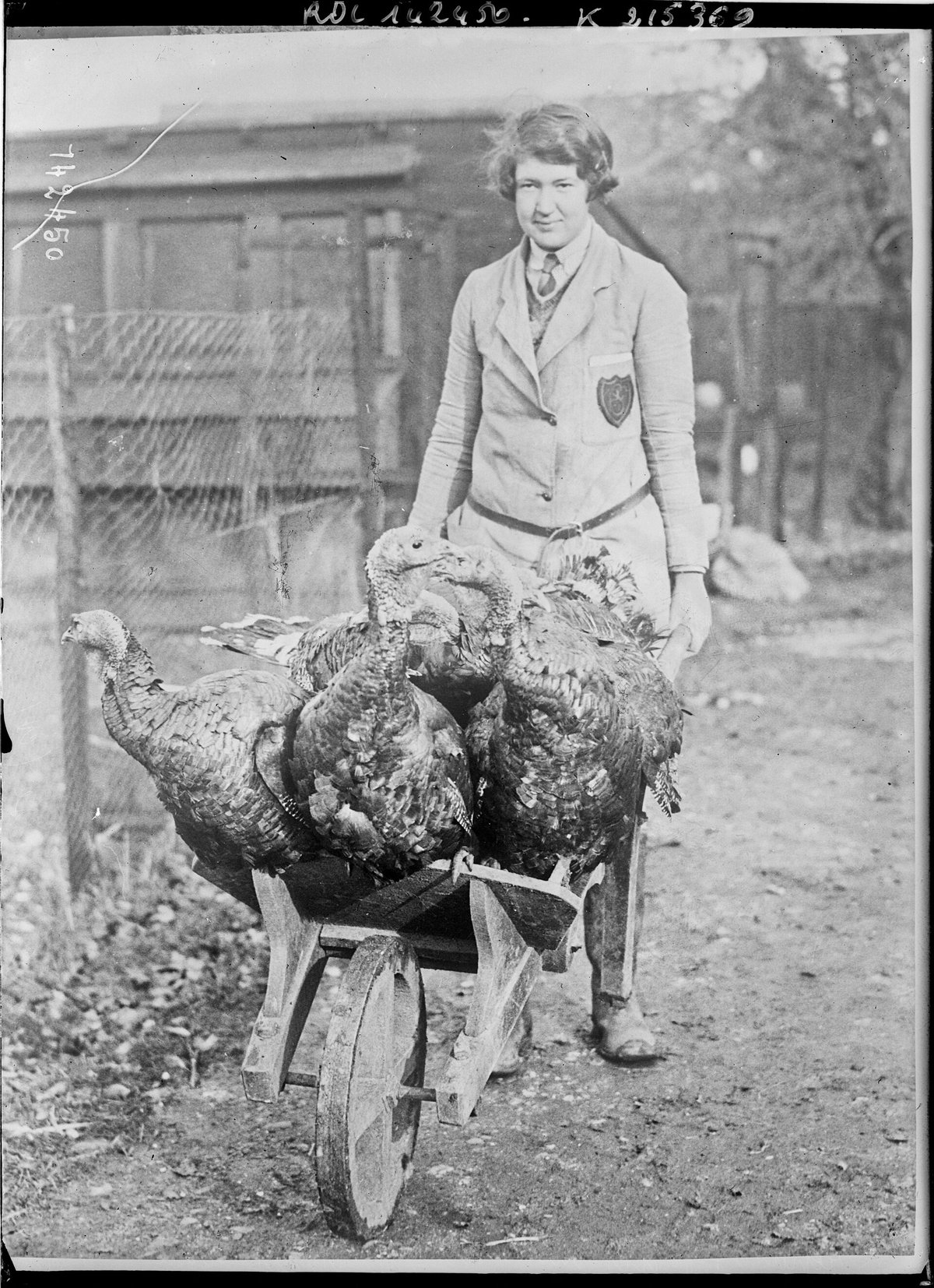
To show why this question is so rarely asked, Taleb tells the story of a turkey. For a thousand days, a farmer feeds it, shelters it, cares for it. By the thousandth day, the turkey has a thousand data points demonstrating, with overwhelming statistical significance, the benevolence of the human species. Its confidence peaks precisely the day before the feast.
The lesson reaches well beyond the barnyard: the absence of accidents is not proof of safety. Sometimes it’s just a counter ticking over. And opacity is a machine for manufacturing turkeys: a chain whose inside no one can see produces exactly the same reassuring signal as a sound one — years of calm, green audits, nothing to report. Until the day it isn’t. The calm of an opaque system tells you nothing, except how patiently something has been accumulating inside it.
What Optimization Sells Without Saying So
Why are modern food supply chains prize-winning turkeys? Because they are optimized — and optimization, in Taleb’s sense, is a trade where only one column ever gets shown.
Every efficiency gain — just-in-time flow, the cheaper single-source supplier, batch consolidation, zero inventory — removes something from the system: slack, give, redundancy, time. The benefit is visible every day, in cents per unit, on a dashboard. The cost is invisible — until the day it arrives, whole, all at once: the single source fails, the consolidated batch contaminates everything it touched, the just-in-time flow spreads the disruption within hours.
This needs saying without moralizing, because there is no moral here: optimizing is not a fault. It is a trade — robustness for efficiency — and that trade can be perfectly reasonable. The Talebian problem lies elsewhere: the trade is hidden. In an opaque chain, no one can say how much fragility was sold, at what price, or where it came to rest. You never knowingly buy a fragile chain. You buy a chain that no one can say is fragile — which, at the moment of payment, amounts to the same thing, and at the moment it breaks, costs far more.
Breaking Small: Aviation Versus the Plate
Because here is the point the word “antifragility” misses when it’s reduced to a resilience slogan: a system doesn’t benefit from error by magic. It only benefits if the error teaches something — and an error only teaches something if it is attributable: traceable to a place, a moment, an action, a cause.
The textbook case is up in the sky. Commercial aviation is, statistically, the safest activity a human being can take part in — and it became so precisely this way: every incident, even a minor one, even one with no consequences, is logged, traced, attributed, analyzed, then fed back into the entire system. An engine that sputters over an ocean changes procedures on five continents. An aircraft’s black box is the exact opposite of a black box in the everyday sense: it exists solely to be opened after every failure. Aviation is antifragile because it industrialized learning from error — every small shock leaves the system safer than the day before.
The food chain, by contrast, breaks blind. An error that can’t be attributed can’t teach anything; it can only spread. So it becomes a mass recall — everything gets recalled because no one knows what — the recall becomes a dead loss, the loss becomes crisis communications, and no one learns anything: the same failure will return under another name, in another supply chain, next year. Both systems will always have incidents. The difference is what they do with them.
This is where traceability changes nature. It is not a control tool, nor an add-on for compliance: it is the condition for learning — what allows a chain to break small, early, locally, instead of breaking big, late, everywhere. A legible chain turns its incidents into information. An opaque chain turns them into catastrophes.
Other People’s Fragility
There remains the question Taleb asks of every system, the one that became the title of his last major book: who has skin in the game? In other words: hidden fragility is carried by someone — who?
Never the person who created it. This is opacity’s darkest property, and it requires no malice whatsoever to operate: whoever removes the slack from the system pockets the gain in cents, visible and daily; whoever eats bears the risk, invisible and deferred; and between the two, with the links indistinguishable, no one is identifiable — so no one is responsible. Opacity is a machine for transferring fragility onto those who decide nothing. There is no culprit in this transfer. There is a structure, and the structure is enough.
Proof reverses the direction of the transfer. Whoever records their practice in an open register does something the statistical calm never will: they expose themselves. Their action is dated, located, attributable — verifiable by anyone, including on the day something goes wrong. To prove is to commit. And that is exactly what makes their signal credible, when so many others cost nothing to emit: a promise that commits no one is worth no more than the ink on its label.
The logic must then be followed to its end, because it has an economic consequence: what commits deserves pay. Whoever puts their own skin back in the game — who takes on the risk of being checked — renders a service to the whole chain: they make it capable of learning, insurable, worthy of trust. A well-built system rewards that service, as it rewards everything that reduces its fragility. A badly built system charges for it — then wonders why no one proves anything.
Let’s replay the recall from the opening, this time in a legible chain. Wednesday, 9 a.m.: an alert on a batch. 11 a.m.: three batches identified, their exact path reconstructed, the affected points of sale notified — the withdrawal is surgical, not sweeping. Friday: the cause traced back to its link in the chain, the procedure corrected, the fix propagated. The incident happened; the system is better than it was before the incident.
The goal was never a chain that doesn’t break. No such thing exists — and promising one just manufactures the next turkey. An opaque chain breaks silently, then all at once. A legible chain breaks small — and learns.
—
Nassim Nicholas Taleb: the turkey problem is laid out in The Black Swan (2007); the fragile/robust/antifragile triad in Antifragile (2012); the question of risk exposure in Skin in the Game (2018). The example of aviation as a learning system owes much to his work, as well as to decades of feedback culture in civil aeronautics.
Ce que ça change pour vous
Le même raisonnement ne se joue pas au même endroit selon votre place dans la chaîne.
Vous êtes distributeur ou centrale d'achat
An optimized chain sells you a visible gain and buys you an invisible risk. The turkey sees nothing coming — until the day before.
VeraTrace pour la distribution →Vous transformez, vous êtes une marque
An opaque chain doesn’t degrade gradually: it says nothing, then it says everything at once. Breaking small and often is what aviation learned, and food manufacturing hasn’t.
VeraTrace pour les transformateurs →Vous êtes collectivité ou acheteur public
The fragility you don’t measure isn’t absent: it sits with another link in the chain, and it comes back to you at the moment of the recall.
VeraTrace pour les territoires →