The Farming Debate Isn’t Too Complex. It’s Badly Described.
Latour and Spinoza: agricultural complexity isn’t excess chatter around a simple object — it’s an outdated apparatus of description. What actually changed is the cost of the singular.
Why ecological mandates have made the farming world illegible with the instruments it has.
Everyone agrees on one point, and it’s about the only one: the farming debate has become illegible. A farmer, an industrialist, an elected official, an environmental group can talk about the same wheat field for an hour without meeting once. It isn’t for lack of listening. I’ve seen people in good faith listen very closely to each other and walk away each certain the other hadn’t understood a thing.
Two answers present themselves, and they’re symmetrical. The first calls for simplification: fewer rules, fewer forms, fewer contradictory mandates, make the trade workable again. The second calls for a verdict: the facts are settled, there’s nothing left to discuss, just enforce them. One wants to reduce the number of constraints, the other wants to reduce the number of viewpoints. Both are trying to bring the complexity back down.
I don’t think either will manage it, because this complexity isn’t excess chatter around a simple object. It’s what happens when an object stops being captured by the instruments that used to describe it.
Modernize, Then Ecologize
Bruno Latour framed the alternative in the mid-1990s, in a formula that hasn’t aged: modernize or ecologize? It wasn’t a slogan but an observation about two incompatible regimes of description.
Modernizing means detaching. Nature is cleanly separated on one side and society on the other; facts on one side, values on the other. What you get is a world of objects with no opinion of their own, ones you can measure, standardize, transport, compare. It’s extraordinarily effective. Modern agriculture was born of this gesture: yield per hectare, protein content, tonnage, a price, a compliance mark. A field becomes a surface producing quantities.
Latour added something more unsettling: this separation never actually happened. We never stopped manufacturing mixed objects — hybrids, in which the technical, the living, the legal, and the social are inseparable. A hybrid corn variety, a groundwater table, a set of specifications, a Holstein cow are as much nature as they are society. Modernity didn’t split the world in two. It split the way we talk about it, and it filed the mixtures away, outside the field of discussion.
To ecologize is to lose the ability to file them away like that. It isn’t adding one more concern to a list: it’s the end of a convenient fiction. Soil carbon, the watershed, the hedgerow, the bee, the neighbor, the farmworker’s health, the territory’s subsistence — all of that was already attached to the wheat field. What’s changed is that we now talk about it, and it becomes impossible to treat the field as a mere surface producing quantities.
Latour spoke of the shift from matters of fact to matters of concern. A matter of fact is established and closes the discussion. A matter of concern has stakeholders, versions, consequences, and it opens the discussion up. Wheat was a matter of fact. It has become a matter of concern. That is the true birthdate of the complexity everyone complains about.
It Isn’t Ecology Muddying the Debate
I need to be precise here, because this is exactly where both camps will want to make me say something I’m not saying.
Ecological mandates don’t complicate the debate out of ideology, excess zeal, or contempt for the trade. They complicate it because they say something true: an agricultural product was never a quantity, it has always been a knot of relationships. We forgot that because our instruments were incapable of recording it — not because it was false.
But their administrative translation is often absurd — and that absurdity isn’t a drafting flaw. Ordered to account for relationships, the administration has only instruments inherited from modernization: indicators, thresholds, flat-rate coefficients, per-hectare averages, checkboxes. So it ends up demanding proof of a singular fact by means of generalities. That’s why the farmer filling out these forms has the very accurate feeling of not saying what they actually do, and the person reading them has the equally accurate feeling of learning nothing.
Anger at paperwork and anger at ecological inaction are therefore, to my astonishment, the same anger. Both camps are observing that the apparatus of description doesn’t hold. One concludes we need less description, the other that we need more constraint. No one proposes describing better.
Food Processing Turns the Screw Further
All of the above holds for the field. In processing, the problem changes order of magnitude.
A fruit yogurt is an object made of twelve distinct histories: a milk, a sugar, a fruit purée, a starch, a ferment, packaging, five shipments, three warehouses. The food industry composes objects and, in the same motion, decomposes their history. Every hand that touches the product adds attachments to it and strips information from it: what passes from one link to the next is a batch, a pallet, an invoice, a certificate — never the memory of what actually happened.
And it’s this very object, its traceability thinning at every stage, that we now ask to account for a carbon footprint, an origin, an absence of deforestation, a water impact. We’re demanding of the end of the chain a knowledge the chain spent forty years methodically destroying. That isn’t bad faith — it’s a structural impossibility.
Why Our Instruments Can’t Describe an Attachment
What’s left is understanding why these instruments fail so consistently. Spinoza gives, I believe, the cleanest explanation, and it’s harsher than the one you usually hear.
It’s often said that agriculture has been over-rationalized, that calculation smothered a finer knowledge. Spinoza doesn’t let you say that. For him, reason never obstructs the highest knowledge: it leads to it. There is no such thing as too much rationality.
What he does distinguish is three kinds of knowledge. The first proceeds from vague experience and from signs, and it encompasses — this is the decisive point — universal notions: man, horse, dog. They form, he writes, when so many images accumulate that the mind can no longer tell the differences apart and retains only a blurred resemblance. The second is reason: properties genuinely held in common, necessary chains of consequence, what can be demonstrated. The third, which he calls intuitive knowledge, knows this particular thing in its singularity.
Now look at our instruments through this lens. Average yield, grade, category, index, the wheat price. Wheat — not that wheat, in that plot, after that May rain, but a class that never grew anywhere. An average is not a property held in common: it’s a resemblance retained after we’ve stopped telling things apart. That is, word for word, the first kind.
Industrial rationalization, then, didn’t over-rationalize. It passed off abstraction as reason. It promoted the first kind of knowledge to the rank of the second, and the promotion was so useful — the generic can be transported, aggregated, contracted, quoted, subsidized — that no one had any interest in contesting it. We called it rigor: a procedure that consisted of no longer seeing the differences.
But an attachment is always singular. This soil, this year, this sequence of decisions. Ecologizing therefore calls for the third kind, and all we know how to produce is the first while believing we’re producing the second. That’s the impasse, stated as precisely as I know how.
The Missing Witness
This knowledge of the singular did exist, though, and it had a home: the farmer. They knew when the harvest was ready, what this land does in a dry summer, what had to be risked that particular year. A whole knowledge, lacking nothing — except a form to travel in. It was only ever passed on attached to a place, a season, a hand.
So it got delegated. To specifications, to reference standards, to labels, to bodies that come and check once a year. That wasn’t a betrayal: it was the only way to make anything travel at all. But what travels is what’s been made generic, and the knowledge thinned out along the way. It arrived at its destination in the shape of a checked box.
The farmer became the one who applies, where they used to be the one who knew. And since that knowledge had no home other than the farmer, losing it meant losing it for good. You cannot strip a trade of its object of knowledge without stripping it, in the same gesture, of its authority to speak about what it does. That’s why this debate is held without its principal witness: not because we refuse to invite them, but because they no longer have any form left in which to testify.
I’ll clarify, because the misreading is easy: this isn’t about pitting peasant knowledge against science. For Spinoza, knowledge of the singular isn’t rustic wisdom — it’s the most demanding form of knowledge there is, higher than reason and no less rigorous. Its only weakness was not knowing how to travel. There’s therefore no return to organize. There’s an infrastructure that’s missing.
Describe, Rather Than Simplify
Latour, on this point, was remarkably consistent. He never proposed simplifying, or settling the matter by fiat. He proposed describing, and he spent his final years having inventories drawn up: what do you depend on to live, who depends on you, what threatens you, what do you hold dear. Grievance books in the literal sense, listing one’s attachments before any discussion begins.
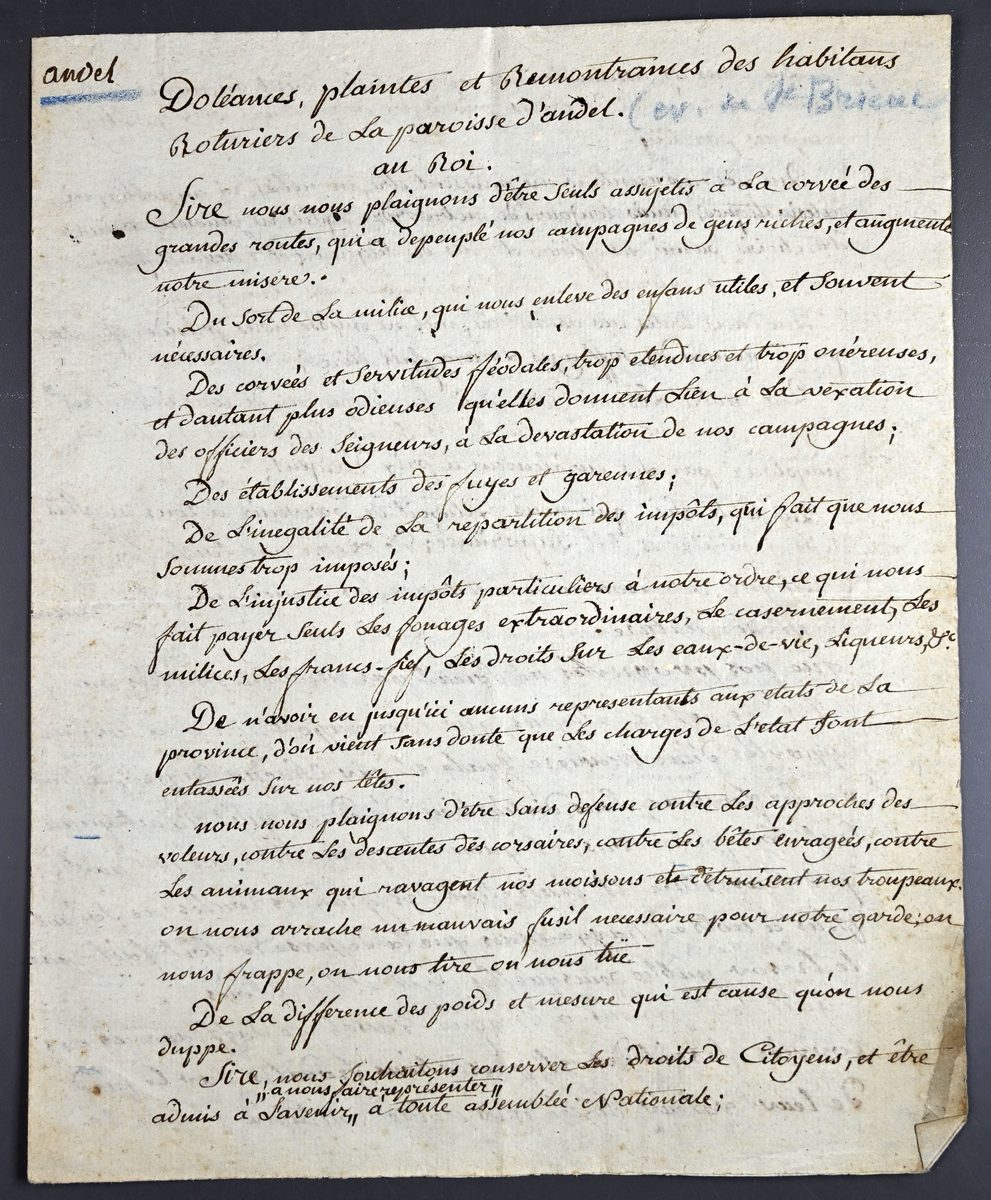
It’s less spectacular than taking a position, and it’s infinitely more political. Because a controversy isn’t resolved by reducing the number of its participants, but when what they’re talking about becomes equally visible to everyone. As long as each party describes the same field in a register the others can’t verify, the debate stays a clash of sincere beliefs. And a clash of sincere beliefs is undecidable — that is the very definition of what we call complexity.
What I take from this fits in one sentence: complexity isn’t a state of the farming world that needs curing. It’s the symptom of an outdated apparatus of description.
What Changed, and That’s All
The conclusion, then, isn’t that we should measure less. It’s that we should measure something else.
The whole of agricultural and food-industry measurement was built to establish generic quantities, because that was the only information able to travel without prohibitive cost. Recording a singular act the moment it occurred, attached to this plot, this day, this batch, was conceivable but impractical: capturing it cost more than the information was worth. That ratio has flipped, recently, and it’s the only genuinely new fact in this whole story. What changed isn’t our virtue or our philosophy. It’s what it costs to preserve a singular fact.
This won’t hand the producer back a knowledge they never entirely lost — they still know, they know it very well, they simply can no longer make it count. It gives them a home outside themselves: a form in which their knowledge can circulate without degrading into generality, and from which a buyer, a cafeteria, an eater can judge what actually happened rather than what they’re told about it.
Wheat doesn’t exist. It’s a class, a quotation, a fatigue of the mind that ended up organizing an entire market. This wheat exists: it grows in a plot with a name, under a rain with a date, in the hands of someone who knows what they did.
The debate won’t become simpler. There’s no reason it should, and it would be a bad sign if it did. It can become decidable.
What this means for you
The same reasoning doesn't play out the same way depending on where you sit in the chain.
You're a producer
You still know, and you know it well: you simply can no longer make it count. It isn’t knowledge to recover — it’s a form to carry it that’s missing.
VeraTrace for producers →You process food, you're a brand
The end of your chain is now asked for a knowledge the chain spent forty years methodically taking apart. That isn’t bad faith — it’s a structural impossibility.
VeraTrace for processors →You're a public authority or public buyer
Demanding proof of a singular fact using per-hectare averages and flat-rate coefficients means learning nothing of what you set out to know. The lever isn’t the constraint — it’s the unit of measure.
VeraTrace for local authorities →You support producers
Anger at paperwork and anger at ecological inaction say the same thing: the apparatus of description doesn’t hold. You’re well placed to see it from both sides.
VeraTrace for advisors →